


Make: TAYLOR
Model: TXH350L
Year: 2016


Make: Manitou
Model: 48" Forks
Year: 2012

Make: JLG
Model: Truss Jib 12'
Year: 2011

Make: Capacity
Model: TJ5000 DOT
Year: 2010

Make: JLG
Model: 450AJ
Year: 2016

Make: FrostFighter
Model: IDF350
Year: 2015
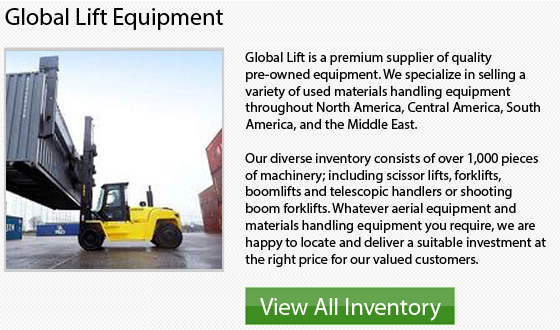
Taylor Rough Terrain Forklift Austin
Rough Terrain Forklift Training
Normally used on construction sites and on forestry and logging projects, Class VII or rough terrain forklifts is a popular alternative for many outdoor settings which need a machinery to run on uneven ground. The OSHA or Occupational Safety and Health Administration states that operators have to receive classroom style training or lecture in addition to supervised driving training. Regular refresher training courses must be taken by the operators so as to keep them in top form.
Lecture or Classroom Training
When learning to operate a rough terrain forklift, the first step is taking lecture or classroom type of instruction. This training includes information regarding the machine which the driver would be using. Details like how to refuel the lift truck and lifting capacities are discussed. Safety tips are really important to understand prior to operation. OSHA does not place a minimum time requirement on classroom training, although, they do state that both written and oral exams could be part of the training process.
Supervised Driving
Supervised driving is the next step in the rough terrain lift truck training, quite similar to when drivers learn to operate a passenger car. The operator should learn how to operate the specific kind of rough terrain lift truck that they will drive in the workplace. As well, they should practice operating this type of forklift in an environment which closely replicates the situations wherein they would be driving. Some of the other conditions covered in training comprise handling nearby structures, vehicle traffic and pedestrians.
Certification
The supervisor can certify the operator for that workplace after a supervisor determines whether an operator is capable of safely driving a rough terrain forklift. The certification for the operator could be kept in their personnel file. If the training is to be taken in a 3rd party training facility, the trainer hands the operator the certification. Because work environments differ, the certifications are not transferable; thus, drivers should be re-certified again in the new environment. Normally, training passes more quickly after the driver has been certified the first time.
There are some extremely essential safety concerns associated with driving a forklift. Operators have to stay alert and able to drive with the utmost attention and care. Practicing good habits could actually save lives at the end of the day. Moreover, much less damage to the merchandise, the work environment or the equipment itself happens when drivers are working at the top of their game.
- Nissan Double Reach Forklifts Austin
Narrow aisle trucks or reach trucks have become more common due to their ability to lessen their aisle count and floor space needs. These types of machinery have a trade-off; the need is for highly... More - Genie Aerial Lifts Austin
The Genie AWP Super Series aerial work platforms are a top favorite in the business because of their ease of use, flexibility and convenience. Their tough design and lightweight maneuverability make them an extremely versatile... More - Caterpillar High Capacity Forklifts Austin
Forklift Motors Purchasing a forklift is not to be taken lightly. A forklift is a big capital expenditure, and a complex machinery with a motor strong enough to perform heavy-lifting jobs. The price tag for... More - Raymond Double Reach Forklifts Austin
Raymond offers excellent forklifts and attachments specifically designed for the food processing industry. This business is amongst the busiest industries within our current world's infrastructure. To be able to handle the diversity in the food... More - Yale Narrow Reach Forklifts Austin
Yale offers a variety of very narrow aisle forklifts that are particularly engineered for utmost storage density. These very narrow aisle forklift are suitable for case picking and pallet handling in applicants ranging from 16... More