
Make: TAYLOR
Model: TXH350L
Year: 2016


Make: Manitou
Model: 48" Forks
Year: 2012

Make: JLG
Model: Truss Jib 12'
Year: 2011

Make: Capacity
Model: TJ5000 DOT
Year: 2010

Make: JLG
Model: 450AJ
Year: 2016

Make: FrostFighter
Model: IDF350
Year: 2015
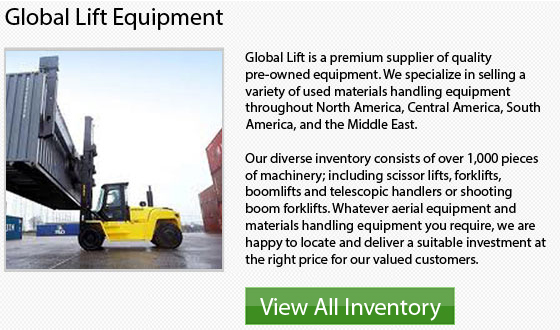
Daewoo Big Forklifts Austin
Daewoo expanded into the construction business, helping the new village movement, a development program for rural Korea. The corporation also took advantage of the burgeoning African and Middle Eastern markets. Daewoo received its GTC designation during this time. Major investment support was offered by the South Korean government to the corporation in the form of subsidized loans. The competing countries were angered by the strict import controls of South Korea, but the government knew that, without help, the chaebols will never survive the global recession caused by the oil crisis during the 1970s. Protectionist policies were essential to make certain that the economy continued to grow.
Daewoo's move into shipbuilding was required by the government, even though Kim felt that both Hyundai and Samsung had greater skill in heavy engineering and was more suited to shipbuilding compared to Daewoo. Kim did not want to take responsibility for the largest dockyard in the world, at Okpo. He said lots of times that the government of Korea was stifling his entrepreneurial instinct by forcing him to undertake actions based on responsibility instead of revenue. Despite his reluctance, Kim was able to turn Daewoo Shipbuilding and Heavy Machinery into a really successful company manufacturing oil rigs and ships which are competitively priced on a tight production timetable. This happened during the 1980s when the economy within South Korea was going through a liberalization stage.
In this period, the government relaxed its protectionist measures and encouraged the existence of small- and medium-sized companies. Daewoo was forced to divest two of its crucial textile corporations, and its shipbuilding industry faced stiffer competition from overseas. The government's objective was to shift to a free market economy by encouraging a more effective allocation of resources. Such a policy was intended to make the chaebols more aggressive in their international dealings. However, the new economic conditions caused some chaebols to fail. The Kukje Group, among Daewoo's competitors, went into liquidation in 1985. The shift of government favour to small private businesses was intended to spread the wealth that had before been concentrated in Korea's industrial centers, Pusan and Seoul.
- Nissan Double Reach Forklifts Austin
Narrow aisle trucks or reach trucks have become more common due to their ability to lessen their aisle count and floor space needs. These types of machinery have a trade-off; the need is for highly... More - Genie Aerial Lifts Austin
The Genie AWP Super Series aerial work platforms are a top favorite in the business because of their ease of use, flexibility and convenience. Their tough design and lightweight maneuverability make them an extremely versatile... More - Caterpillar High Capacity Forklifts Austin
Forklift Motors Purchasing a forklift is not to be taken lightly. A forklift is a big capital expenditure, and a complex machinery with a motor strong enough to perform heavy-lifting jobs. The price tag for... More - Raymond Double Reach Forklifts Austin
Raymond offers excellent forklifts and attachments specifically designed for the food processing industry. This business is amongst the busiest industries within our current world's infrastructure. To be able to handle the diversity in the food... More - Genie Boom Lifts Austin
There are truly many reasons to pick Genie for your lift equipment needs. Genie provides top-of-the-industry items, support, and service to help you with all of your equipment needs. Genie is committed to making your... More