
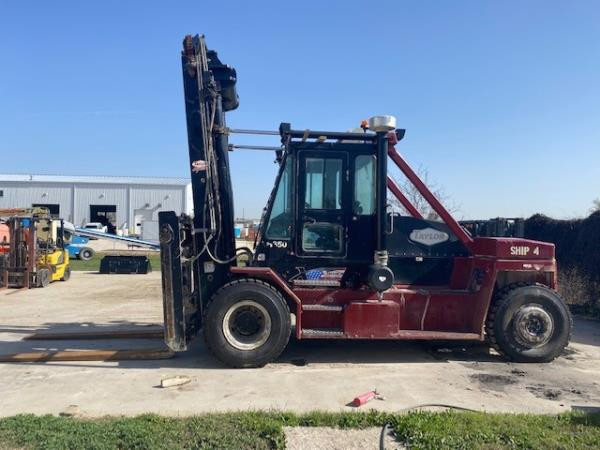
Make: TAYLOR
Model: TXH350L
Year: 2016

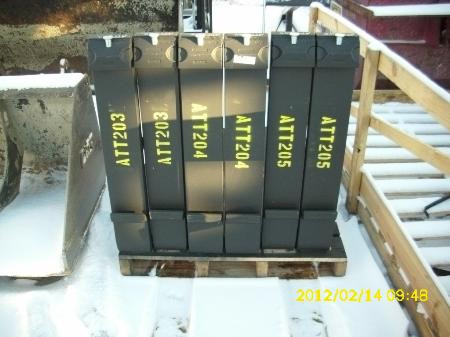
Make: Manitou
Model: 48" Forks
Year: 2012
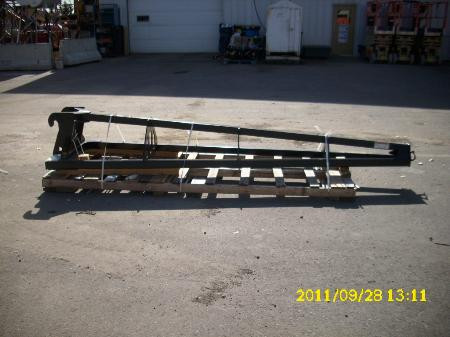
Make: JLG
Model: Truss Jib 12'
Year: 2011
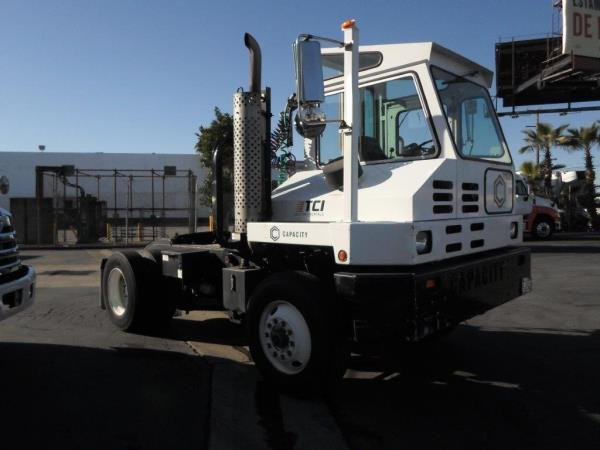
Make: Capacity
Model: TJ5000 DOT
Year: 2010
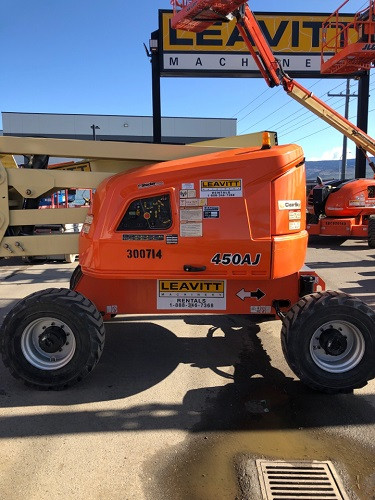
Make: JLG
Model: 450AJ
Year: 2016

Make: FrostFighter
Model: IDF350
Year: 2015
CAT Telehandler Austin
To make sure that safety is a top priority, there are 5 important steps. To be able to make certain that the unit is visually safe, the initial step is to perform a Walk-Around Inspection. After that check if the work location is safe to utilize with a Worksite Assessment. The Function Test is the third step in order to know whether or not the model is working in a safe way. The 4th thing to consider is Proper Operation, so as to know whether or not the model is safely operating. Last of all, Proper Shutdown must be checked in order to make certain the unit is in a safe place and is capable of shutting down properly.
At the center of the 5 steps and this regulation, there is a machinery which stands on a triangular footprint and lifts heavy weights to impressive heights. The main objective is to keep the telehandler upright, but of course there are dangers.
The telehandler's triangular base consists of the rear-axle pivot point and the two front wheels. The rear axles often oscillates, therefore the rear wheels are not considered part of the base. The telehandler remains upright so long as the machine's center of gravity, that is defined as the point in 3 dimensions around which the equipment's weight is balanced, stays oriented inside the stability triangle.
When a load is placed on the forks while the boom is down, the center of gravity down and forward. The load if lifted would change the center of gravity to the rear upwards. At the same time, the stability triangle shrinks when this occurs. Thus, the higher you lift a load, the less of a margin for error you have since the stability triangle lessens.
With a stable but small stability triangle, it leaves less room for the center of gravity to move left or right. This wandering action can change the stability triangle, leaving less room for the frame to remain balanced if it is not perfectly level. Like for example, imagine the center of gravity resembling a plumb bob hanging from the boom. You would always be able to find the center of gravity somewhere on a totally vertical line between the center of the ground and a point on the boom. If the frame is not level, the center of gravity would not be oriented over the machine's centerline. The stability triangle is continuously aligned with the centerline of the machine.
- Caterpillar Container Handlers Austin
A full container handler which is unequaled in efficiency and lifting capacity is referred to as a Caterpillar Container Handler. Modern technology, high performance and stability combine to make Caterpillar Container handlers the best choice... More - Jungheinrich End Control Forklifts Austin
The lift truck is a vital machinery to help workers lift and move heavy weight supplies and products with speed and efficiency without straining their bodies. The way a company uses this machinery could considerably... More - Snorkel Articulated Boom Lift Austin
A-Series Articulating Boom Lifts The A-Series of articulating boom lifts by Snorkel dominate on the tougher job sites. These equipment combine remarkable maneuverability with precision and power. These machines are capable of reaching working heights... More - Genie Straight Manlifts Austin
The company introduced the innovative, portable pneumatic material lift, the Genie Hoist, at the start of Genie Industries' history in the year 1966. To offer its clients the best, Genie continued to develop fast and... More - Genie Boom Lifts Austin
There are truly many reasons to pick Genie for your lift equipment needs. Genie provides top-of-the-industry items, support, and service to help you with all of your equipment needs. Genie is committed to making your... More